-
Going Live on Google Cloud Marketplace
A Technical Lead’s Experience As the technical lead for MOGOPLUS’s recent launch on Google Cloud Marketplace, I want to share our journey and key insights. MOGOPLUS provides insights from unstructured data, primarily serving the lending sector. Our decision to join the Google Cloud Marketplace stemmed from our existing relationship as a GCP customer and our…
-
DevSecOps – Acronyms
While dealing with Security Professionals as Devops/DevSecOps person, you will encounter certain terms and acronyms. It helps to understand what they mean and what tools are available for us to satisfy the security requirements. In this blog post, I will list and describe a few terms/acronyms and tools that I have come across relating to…
-
Machine Learning for the Lazy Engineer – BigQuery
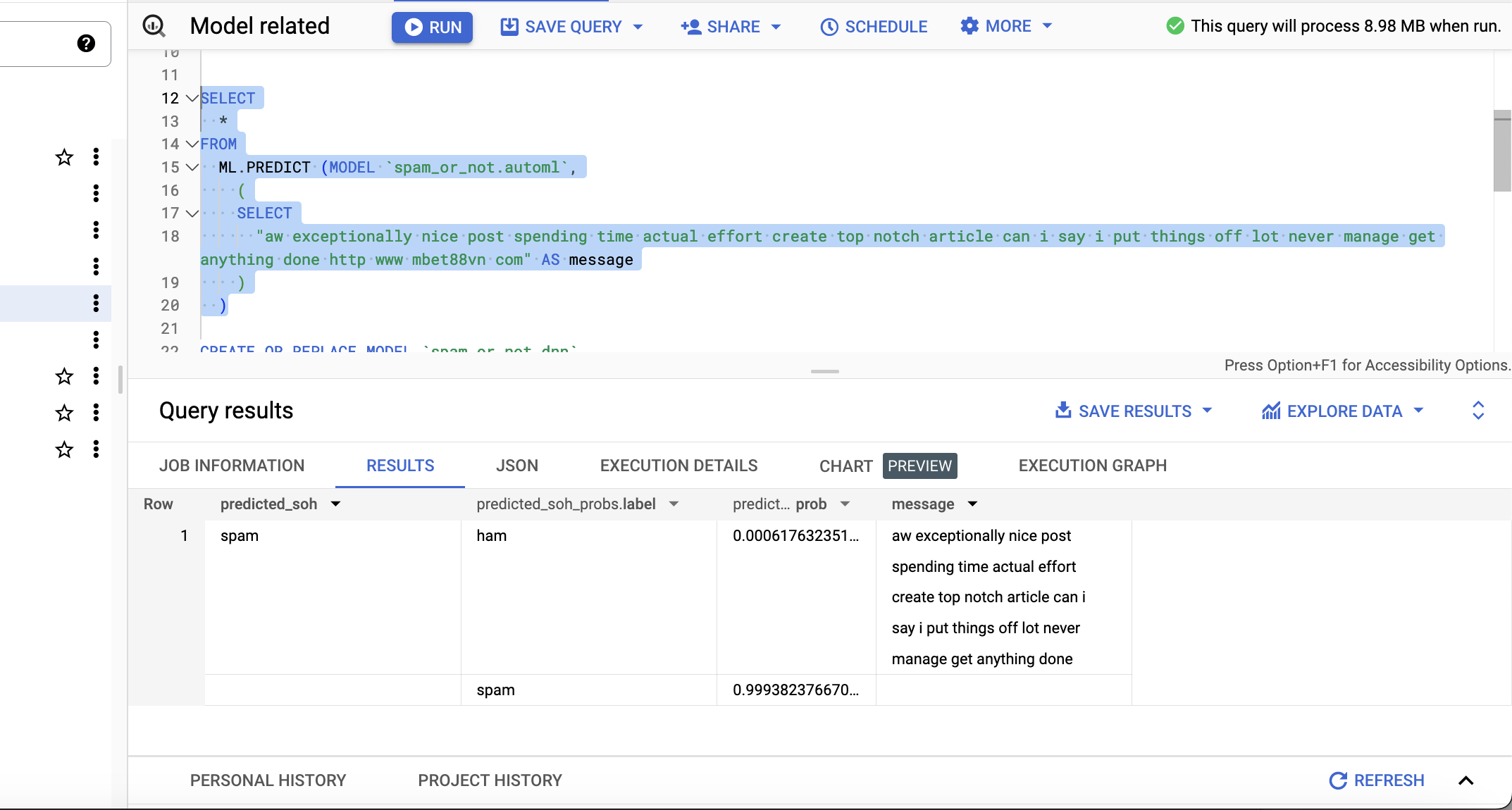
Introduction I first played with machine learning a few years ago when I built an app that applied labels to images of food. I learned a lot during that time, but I found the development setup to be too labor-intensive and my laptop got too hot during training. I got sidetracked with other cloud and…
-
BigQuery Bulk Insert using Python
To insert multiple rows at once using DML in BigQuery, you can do something like this: The above snippet inserts multiple rows into the table (table with columns: id and createdAt) in one go. You can also see that values types are being supplied (id:STRING and createdAt:TIMESTAMP). Binding the values this way (using parameters) will…
-
Row to Column in MySQL
Say you have two tables like these: And you have these values: id name 1 Kesavan 2 Madhavan user_id attribute_name attribute_value 1 GENDER M 1 PREMIUM_USER N 1 SUBSCRIBED_TO_NEWSLETTER Y 2 GENDER M 2 PREMIUM_USER Y To get a result like this: id name GENDER PREMIUM_USER SUBSCRIBED_TO_NEWSLETTER 1 Kesavan M N Y 2 Madhavan M…
-
AWS SSM Parameter Store IAM Policy for restricting by Path and Tag
I wanted to restrict access to some parameters based on the path and tag. Say, I have a key:/production/Param1=Value1with a tag:Application1=One I was expecting a policy like this: { “Version”: “2012-10-17”, “Statement”: [ { “Sid”: “VisualEditor0”, “Effect”: “Allow”, “Action”: [ “ssm:GetParameterHistory”, “ssm:ListTagsForResource”, “ssm:GetParametersByPath”, “ssm:GetParameters”, “ssm:GetParameter” ], “Resource”: “arn:aws:ssm:::parameter/production/*”, “Condition”: { “StringEquals”: { “ssm:resourceTag/Application1”: “One” }…